Werbung: Dieser Artikel enthält Affiliate-Links. Alkohol erst ab 18. Alle Hinweise am Ende des Artikels.
Die zwei Gesichter des deutschen Rieslings
Wenn man von den großen Weißweinen der Welt spricht, ist der Riesling unweigerlich Teil des Gesprächs. Und wenn es um Riesling geht, ist Deutschland sein unangefochtenes Königreich. Innerhalb dieses Königreichs stehen zwei Regionen als Titanen da, die Weine von atemberaubender Qualität und doch grundverschiedenem Charakter hervorbringen: der Rheingau und die Mosel. Für den Uneingeweihten mögen beide einfach nur ‚deutscher Riesling‘ sein. Aber für einen anspruchsvollen Gaumen repräsentieren sie zwei unterschiedliche Adelshäuser, jedes mit seiner eigenen Philosophie, seinem Terroir und seinem Anspruch auf den Thron. Hier geht es nicht darum, welche Region besser ist, sondern um eine faszinierende Erkundung, wie Geografie, Geologie und Geschichte eine einzige Rebsorte in zwei zutiefst unterschiedliche, aber gleichermaßen großartige Weine verwandeln können. Wir tauchen ein in die Welt des kräftigen, strukturierten Rheingau Wein und stellen ihn dem zarten, ätherischen Charakter des Mosel Wein gegenüber.
Der Rheingau: Ein Vermächtnis von Kraft und Prestige
Der Rheingau ist eine Region voller Geschichte und Prestige. Es ist ein kompakter, 35 Kilometer langer Landstrich, an dem der Rhein eine untypische Biegung nach Westen macht und so einen perfekten, sonnenverwöhnten Korridor aus Südhängen schafft. Diese einzigartige Geografie ist das Fundament der Kraft des Rheingaus. Die Weine von hier werden oft als aristokratisch, strukturiert und gebieterisch beschrieben.
Ein sonnenverwöhntes südliches Königreich
Die Magie des Rheingaus beginnt mit seiner Ausrichtung. Das Taunusgebirge im Norden wirkt als natürliche Barriere, schützt die Weinberge vor kalten Winden und schafft ein warmes, geschütztes Mikroklima. Die Südhänge sorgen dafür, dass die Reben den ganzen Tag über maximale Sonneneinstrahlung erhalten. Darüber hinaus wirkt die breite, spiegelnde Oberfläche des Rheins wie ein riesiger Spiegel, der zusätzliches Sonnenlicht und Wärme auf die Trauben zurückwirft. Diese Kombination ermöglicht es den Rieslingtrauben, eine optimale Reife zu erreichen und konzentrierte Aromen sowie ein höheres potenzielles Alkoholniveau als in kühleren deutschen Regionen zu entwickeln. Diese physiologische Reife ist der Schlüssel zum vollmundigen, kraftvollen Stil, der den Rheingau Wein auszeichnet.
Die Geschichte des Bodens: Mehr als nur Schiefer
Während die Mosel fast ausschließlich durch Schiefer definiert wird, weist der Rheingau eine komplexere und vielfältigere Geologie auf. Diese geologische Vielfalt trägt maßgeblich zur Komplexität seiner Weine bei. Die Weinberge in Flussnähe weisen oft Böden aus Löss und Lehm auf, die vollere, fruchtigere Rieslinge hervorbringen. Weiter hangaufwärts trifft man auf Quarzit und Schiefer, die den Weinen eine stählerne Mineralität und ein festes strukturelles Rückgrat verleihen. Berühmte Lagen wie die in Rüdesheim sind bekannt für ihre steinigen Schiefer- und Quarzitböden, die Weine von unglaublicher Langlebigkeit und mineralischer Intensität hervorbringen. Dieses Mosaik an Böden bedeutet, dass ein Rheingau-Riesling von reich texturiert und pfirsichartig bis hin zu präzise, mineralisch und trocken reichen kann.
Das klassische Profil eines Rheingau-Rieslings
Ein klassischer trockener Rheingau-Riesling ist ein substanzvoller Wein. Im Glas zeigt er oft einen tieferen Goldton als sein Gegenstück von der Mosel. Die Nase wird typischerweise von reifen Steinfrüchten wie Pfirsich, Aprikose und Nektarine dominiert, oft ergänzt durch Noten von gelbem Apfel, Quitte und in wärmeren Jahrgängen einem Hauch von Exotik. Am Gaumen ist der Wein mittel- bis vollmundig mit einer kräftigen Struktur. Die Säure ist ausgeprägt, aber wunderbar integriert und sorgt für ein Gleichgewicht zur Fülle der Frucht. Der Abgang ist lang, komplex und oft von einem deutlichen mineralischen Charakter geprägt, der von seinem Boden zeugt. Dies sind Weine, die für die Reifung gemacht sind, und ein erstklassiges Rheingau Grosses Gewächs (GG) kann sich über Jahrzehnte entwickeln, wobei es komplexe Noten von Honig, Bienenwachs und Petrol entwickelt, während es seine strukturelle Integrität bewahrt.
Die Mosel: Eleganz, auf steilen Schieferhängen geschmiedet
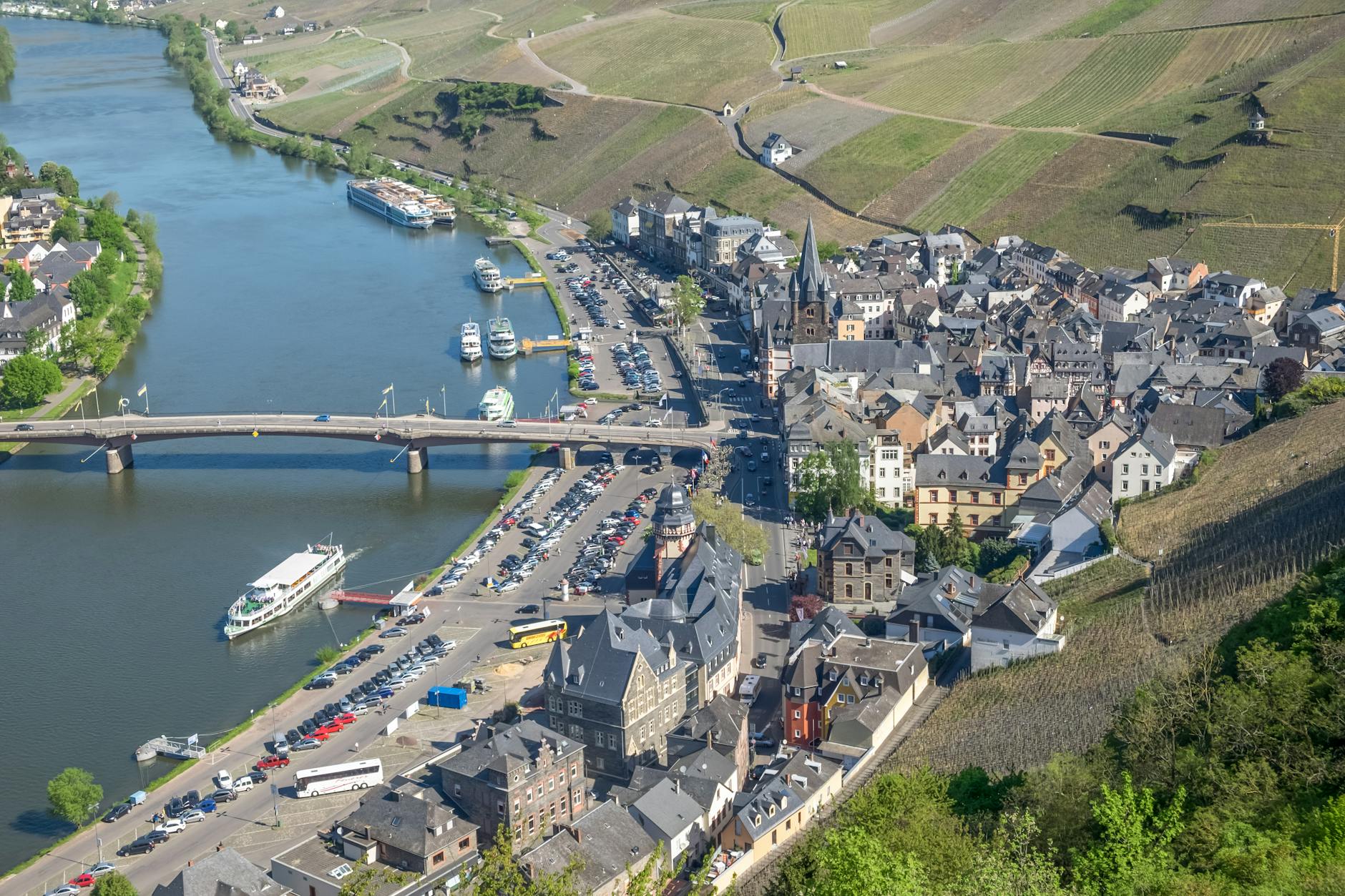
Wenn der Rheingau ein mächtiger König ist, der Hof hält, so ist die Mosel eine ätherische Königin, die auf Messers Schneide tanzt. Das Moseltal ist eine der dramatischsten und atemberaubendsten Weinlandschaften der Welt. Hier schlängelt sich die Mosel durch tiefe Täler, an deren unglaublich steilen Hängen sich die Weinberge festklammern – einige in einem Winkel von über 60 Grad. Hier dreht sich alles um den Erhalt von Leichtigkeit, Zartheit und aromatischer Reinheit.
Weinbau am Limit
Das prägende Merkmal der Mosel sind ihre steilen, schieferbedeckten Hänge. Diese Topografie ist Segen und Fluch zugleich. Sie macht die Arbeit im Weinberg unglaublich mühsam und gefährlich, da fast alles von Hand erledigt werden muss. Doch diese Hänge sind auch der Schlüssel zum Erfolg der Mosel. Der steile Winkel maximiert die Sonneneinstrahlung auf die Reben in diesem kühlen, nördlichen Klima. Die dunklen Schieferböden speichern die Tageswärme und geben sie nachts an die Reben zurück, was die Reifung unterstützt. Der Fluss reflektiert ebenfalls das Sonnenlicht und sorgt so für eine doppelte Dosis Sonnenenergie. Dieses Grenzklima bedeutet, dass die Trauben langsam reifen, intensive Aromen entwickeln, während sie einen durchdringend hohen Säuregehalt beibehalten und selten hohe Zuckerwerte erreichen, was zu Weinen mit naturgemäß niedrigerem Alkoholgehalt führt.
Die Herrschaft des blauen und roten Schiefers
Die Seele des Mosel Weins ist sein Boden: devonischer Schiefer. Er verleiht dem Wein seine charakteristische ‚Mineralität‘. Dem blauen Schiefer in Lagen wie Bernkastel und Wehlen wird nachgesagt, dass er besonders blumige und elegante Weine mit einer feingliedrigen Struktur hervorbringt. Der rote Schiefer, der in Dörfern wie Erden und Ürzig vorkommt und mehr Eisenoxid enthält, neigt dazu, Weine zu erzeugen, die (nach Mosel-Maßstäben) etwas reicher, würziger und kraftvoller sind. In jedem Fall verleiht dieser Schieferboden ein Geschmacksprofil, das oft als nasser Stein, Feuerstein oder Rauch beschrieben wird – ein prägendes Merkmal, das Liebhaber von Mosel-Riesling sofort erkennen.
Das quintessenzielle Profil eines Moselweins
Ein klassischer Mosel-Riesling ist der Inbegriff der Zartheit. Er hat eine blasse Strohfarbe mit grünen Reflexen und wirkt im Glas fast schwerelos. Die Aromen springen förmlich aus dem Glas: grüner Apfel, weißer Pfirsich, Limettenschale und weiße Blüten, alles untermalt von dieser unverwechselbaren schiefrigen Mineralität. Am Gaumen ist der Wein leichtfüßig und elektrisierend. Die Säure ist der Star der Show – sie ist hoch, rassig und bildet ein Spannungsgerüst, das den Wein unglaublich lebendig und vital wirken lässt. Der Alkoholgehalt ist oft sehr niedrig, manchmal nur 7,5–9 % bei restsüßen Stilen wie Kabinett oder Spätlese. Dieser Stil mit seinem Hauch von Restsüße, der die hohe Säure perfekt ausbalanciert, ist das Markenzeichen der Region. Das Ergebnis ist ein Wein von Filigranität, Spannung und berauschender Frische.
Eine Geschichte zweier Rieslinge: Der direkte Vergleich
Die Unterschiede zu verstehen ist der Schlüssel, um den richtigen Wein für den richtigen Moment zu wählen. Lassen Sie uns die wesentlichen Unterscheidungsmerkmale aufschlüsseln:
Körper & Alkohol: Der Rheingau ist der Schwergewichtschampion. Seine Weine sind mittel- bis vollmundig, mit einem Alkoholgehalt bei trockenen Weinen typischerweise im Bereich von 12–13,5 %. Die Mosel ist das Federgewicht und bringt leichte, ätherische Weine hervor, deren Alkoholgehalt bei feinherben Stilen oft unter 10 % liegt und bei trockenen Weinen selten 12,5 % übersteigt.
Fruchtprofil: Denken Sie bei Rheingau an Gelb und Orange – reifer Pfirsich, Aprikose, Mango und gelber Apfel. Denken Sie bei der Mosel an Grün und Weiß – grüner Apfel, Limette, weiße Blüten und Sternfrucht.
Struktur & Säure: Beide haben eine hohe Säure, aber sie äußert sich unterschiedlich. Im Rheingau ist die Säure ein kraftvolles, strukturelles Element, das die reiche Frucht stützt. An der Mosel ist die Säure ein Drahtseilakt, ein rassiger, laserartiger Strahl, der im Mittelpunkt des Weins steht.
Definierendes Merkmal: Für den Rheingau sind es Kraft und Tiefe. Für die Mosel sind es Zartheit und Mineralität.
Die Wahl des richtigen deutschen Rieslings: Ein praktischer Leitfaden
Nachdem Sie nun die stilistischen Unterschiede verstehen, wie treffen Sie Ihre Wahl? Es hängt alles vom Anlass und Ihren persönlichen Vorlieben ab.
Für einen kräftigen, trockenen Weißwein zum Essen …
Greifen Sie zu einem Rheingau Wein. Ein Rheingau Riesling Trocken oder ein prestigeträchtiges Grosses Gewächs (ein trockener Wein aus einer Spitzenlage) ist ein fantastischer Essensbegleiter. Sein Körper und seine Intensität können es mit reichhaltigeren Gerichten wie Schweinebraten mit Äpfeln, Wiener Schnitzel, cremigen Pastasaucen oder gegrilltem Fisch aufnehmen. Seine Komplexität und Kraft machen ihn zu einer überzeugenden Alternative zu einem weißen Burgunder.
Für einen leichten, erfrischenden Aperitif oder zu scharfen Speisen …
Ein klassischer Mosel Wein ist Ihre Antwort. Ein Mosel Kabinett, mit seinem leichten Hauch von Süße, der perfekt durch messerscharfe Säure ausgeglichen wird, ist einer der großartigsten Aperitif-Weine der Welt. Er ist auch eine magische Kombination zu scharfen Gerichten wie der thailändischen oder vietnamesischen Küche. Der niedrige Alkoholgehalt kollidiert nicht mit der Schärfe, und der Hauch von Süße kühlt den Gaumen, während die Säure jegliche Reichhaltigkeit durchschneidet.
Fazit: Ein Königreich mit zwei Thronen
Die Rivalität zwischen Rheingau und Mosel ist keine Frage der Qualität, sondern des Stils. Keine der beiden Regionen ist überlegen; sie sind einfach unterschiedlich und bieten jeweils einen einzigartigen und authentischen Ausdruck der Rieslingtraube. Der Rheingau schenkt uns einen Wein von Kraft, Tiefe und intellektueller Komplexität, einen Wein zum Nachdenken bei einem herzhaften Mahl. Die Mosel gibt uns einen Wein von Anmut, Energie und reiner, unverfälschter Erfrischung, einen Wein, der der Schwerkraft zu trotzen scheint. Den Kontrast zwischen einem kraftvollen Rheingau Wein und einem zarten Mosel Wein zu erkunden, ist eine der lohnendsten Reisen, die ein Weinliebhaber unternehmen kann. Die einzige Frage ist: Welchen werden Sie zuerst einschenken?
Einige Links in diesem Artikel sind Affiliate-Links. Bei einem Kauf über diese Links erhalten wir eine kleine Provision — der Preis bleibt für dich gleich. So unterstützt du unsere Verkostungsarbeit.
Werbe- und Affiliate-Inhalte sind als solche gekennzeichnet (Hinweis nach §5 TMG und §6 MStV).
Hinweis nach §13 JuSchG: Unsere Inhalte richten sich ausschließlich an Erwachsene ab 18 Jahren. Alkohol erst ab 18 — verantwortungsvoller Genuss steht für uns über jeder Empfehlung. Als Amazon-Partner verdienen wir an qualifizierten Verkäufen.
Hinweis nach §13 JuSchG. Schnapsparadies ist ein redaktionelles Magazin
zu Spirituosen, Wein und Bier — wir verkaufen nichts und empfehlen nur. Inhalte richten
sich an erwachsene Leser:innen ab 18 Jahren. Verantwortungsvoller Genuss. Mehr










Comments are closed.