
Werbung: Dieser Artikel enthält Affiliate-Links. Alkohol erst ab 18. Alle Hinweise am Ende des Artikels.
Das königliche Herz des deutschen Rieslings: Ein tiefer Einblick in den Rheingau Wein
Stellen Sie sich steile, sonnenverwöhnte Hänge vor, die dramatisch zu einem breiten, majestätischen Fluss abfallen. Uralte Burgen und prachtvolle Klöster wachen über sorgfältig gepflegte Weinberge. Das ist kein Märchen, das ist der Rheingau – ein Landstrich, der das historische und qualitative Herz des deutschen Weins darstellt. Obwohl Deutschland viele fantastische Weinregionen besitzt, hat der Rheingau einen besonderen, fast mythischen Status. Seit Jahrhunderten setzt Rheingau Wein, insbesondere sein Riesling, den weltweiten Maßstab für Eleganz, Komplexität und Langlebigkeit.
Doch was macht diese relativ kleine, 3.000 Hektar große Region so außerordentlich bedeutsam? Die Antwort liegt nicht in einem einzigen Faktor, sondern in einem einzigartigen Zusammentreffen von Geografie, Geologie und einer bahnbrechenden Geschichte, die bis heute jede Flasche prägt. Dieser Artikel führt Sie hinter das Etikett, um die Seele des Rheingau Rieslings zu erkunden und die Geheimnisse zu lüften, die diesen Wein zu einem wahren König in der Welt des Weinbaus machen.
Eine geografische Anomalie: Wie der Rhein den perfekten Weinberg schafft
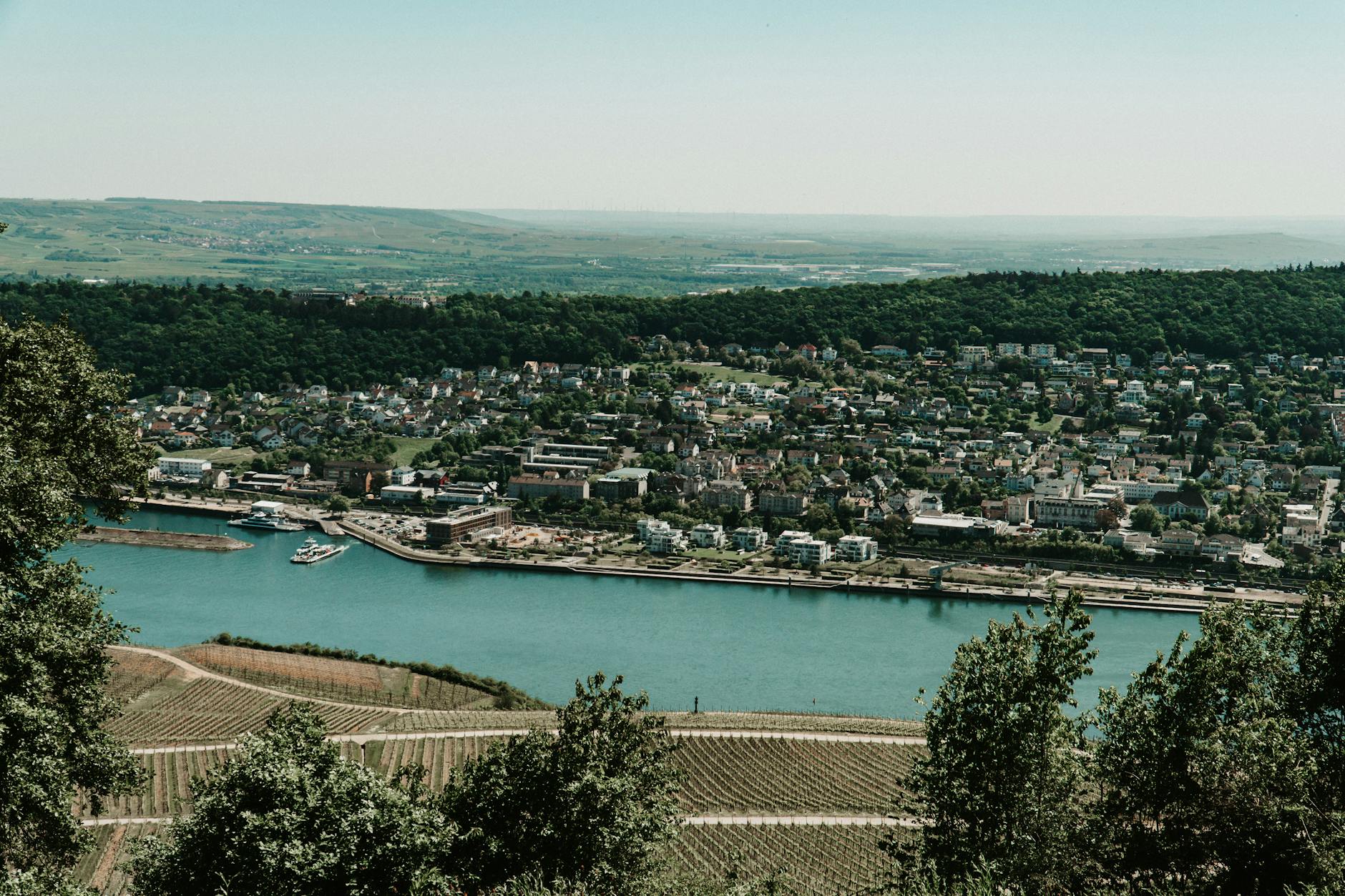
Die Geschichte des Rheingau Weins beginnt mit einer geografischen Besonderheit. Auf dem größten Teil seiner Reise fließt der Rhein nach Norden. Auf einem kurzen, 30 Kilometer langen Abschnitt zwischen Wiesbaden und Rüdesheim zwingt ihn das Taunusgebirge jedoch zu einer scharfen Biegung nach Westen. Diese einfache Richtungsänderung schafft ein Mikroklima, das nichts weniger als ein Paradies für den Weinbau ist.
Die Südausrichtung
Dieser Ost-West-Verlauf bedeutet, dass die Mehrheit der Rheingauer Weinberge an steilen, nach Süden ausgerichteten Hängen am rechten Flussufer angelegt ist. Diese Ausrichtung ist in einem kühlen nördlichen Klima wie dem Deutschlands von entscheidender Bedeutung. Sie ermöglicht es den Reben, über den Tag hinweg ein Maximum an Sonnenlicht einzufangen. So erreichen die Rieslingtrauben eine optimale Reife, entwickeln komplexe Zucker und Aromen und bewahren gleichzeitig ihre charakteristische Säure.
Der Schutzschild des Taunusgebirges
Dasselbe Taunusgebirge, das den Fluss umlenkt, fungiert auch als massive natürliche Barriere. Es schützt die Weinberge vor kalten, rauen Winden aus dem Norden und Osten. Diese schützende Umarmung schafft ein wärmeres, stabileres Mikroklima, das die Vegetationsperiode verlängert und es den Trauben ermöglicht, bis spät in den Herbst am Rebstock zu hängen und so eine unglaubliche Tiefe und Konzentration zu entwickeln.
Der mäßigende Einfluss des Flusses
Der Rhein selbst ist ein aktiver Teilnehmer an diesem Prozess. Die breite Wasseroberfläche wirkt wie ein riesiger Spiegel, der das Sonnenlicht auf die Hänge zurückwirft und so für zusätzliche Wärme und Licht sorgt. Darüber hinaus fungiert die große Wassermasse als Wärmeregulator: Sie speichert tagsüber Wärme und gibt sie nachts wieder ab, was dazu beiträgt, Frostschäden im Frühjahr und Herbst zu vermeiden. Diese Synergie aus Hang, Gebirge und Fluss schafft die perfekte Wiege für den Anbau von Weltklasse-Riesling.
Die Seele im Boden: Die vielfältigen Terroirs des Rheingaus
Wenn die Geografie die Leinwand liefert, dann liefert die Geologie die Farbe. Der Charakter eines Rheingau Weins wird maßgeblich von dem spezifischen Boden beeinflusst, auf dem seine Reben wachsen. Die Region ist ein Mosaik aus verschiedenen Bodenarten, von denen jede dem fertigen Wein eine eigene Persönlichkeit verleiht. Das Verständnis dieser Vielfalt ist der Schlüssel, um die Nuancen zwischen einem Wein aus Rüdesheim und einem aus Hochheim wertzuschätzen.
Der steile Schiefer des westlichen Rheingaus
Im westlichen Teil der Region, rund um die berühmten Orte Rüdesheim und Assmannshausen, sind die Weinberge unglaublich steil und von Schieferböden geprägt. Dieses dunkle, wärmespeichernde Gestein ist perfekt für die kühlsten Teile der Region. Es zwingt die Wurzeln der Reben, tief nach Wasser und Nährstoffen zu graben, was zu Weinen von unglaublicher Intensität und Konzentration führt. Rieslinge von diesen Schieferböden, wie jene aus den Lagen Berg Schlossberg oder Berg Rottland, sind bekannt für ihre rassige Säure, eine tiefgründige Mineralität, die als rauchig oder feuersteinartig beschrieben werden kann, und zarte Aromen von Zitrusfrüchten und weißem Pfirsich. Interessanterweise ist Assmannshausen eine seltene Ausnahme, berühmt für die Erzeugung von Deutschlands feinstem Spätburgunder auf denselben Schieferböden.
Löss und Lehm des zentralen Rheingaus
Bewegt man sich ostwärts in Richtung von Dörfern wie Geisenheim, Johannisberg und Hattenheim, werden die Böden tiefer und reichhaltiger, mit mehr Löss, Lehm und Ton. Diese Böden haben eine größere Wasserspeicherkapazität und sind nährstoffreicher. Die hier angebauten Rieslinge sind tendenziell kräftiger, breiter und texturreicher als ihre auf Schiefer gewachsenen Pendants. Sie zeigen oft reifere Fruchtprofile mit Noten von gelbem Apfel, Aprikose und einem opulenteren, mundfüllenden Charakter. Auch diese Weine werden von einem straffen Säuregerüst getragen, präsentieren aber einen volleren, großzügigeren Ausdruck des Rheingau Rieslings.
Quarzit und Kies des oberen Rheingaus
Im östlichsten Teil der Region, insbesondere rund um die Stadt Hochheim am Main (die bekanntermaßen dem englischen Begriff „Hock“ für Rheinwein ihren Namen gab), bestehen die Böden aus einer Mischung aus Ton, Mergel und Quarzit. Insbesondere der Quarzit verleiht den Weinen eine ausgeprägte, stählerne Mineralität. Rieslinge aus Hochheimer Lagen wie Hölle oder Kirchenstück sind für ihre Struktur, Kraft und ihr außergewöhnliches Reifepotenzial bekannt und benötigen oft mehrere Jahre in der Flasche, um ihre volle Komplexität zu entfalten.
Ein Vermächtnis der Qualität: Die Geschichte, die den Rheingau Wein formte
Der Ruf des Rheingaus wurde nicht über Nacht aufgebaut. Er ist das Ergebnis jahrhundertelanger Hingabe, Innovation und eines unermüdlichen Strebens nach Qualität, oft angeführt von Klosterorden und Adelsgütern.
Die Zisterziensermönche des 1136 gegründeten Klosters Eberbach waren Pioniere im Weinbau. Sie studierten akribisch ihre Weinberge, identifizierten die besten Parzellen für bestimmte Rebsorten und schufen damit eines der ersten Lagenklassifikationssysteme der Welt. Ihr Einfluss begründete eine Qualitätskultur, die bis heute fortbesteht.
Die vielleicht berühmteste Geschichte der deutschen Weingeschichte ereignete sich 1775 auf Schloss Johannisberg. Der Kurier, der die Erlaubnis zum Erntebeginn überbringen sollte, verspätete sich um Wochen. Als er endlich ankam, waren die Trauben von scheinbarer Fäulnis (Botrytis cinerea oder „Edelfäule“) befallen. Aus Angst vor einem Totalverlust ernteten und kelterten die Mönche die Trauben trotzdem und entdeckten, dass der daraus resultierende Wein erstaunlich reichhaltig, süß und komplex war. Dieser glückliche Zufall war die Geburtsstunde des Spätlese-Weins und legte den Grundstein für Deutschlands weltberühmte edelsüße Weine.
Die Stile des Rheingau Rieslings entschlüsselt
Rheingau Wein bietet ein faszinierendes Spektrum an Stilen, von knochentrocken bis üppig süß. Das Verständnis der Schlüsselbegriffe ist für die Auswahl unerlässlich.
Trocken & Feinherb: Der moderne trockene Stil
Obwohl historisch für seine feinherben Stile bekannt, ist der Großteil des heutzutage produzierten Rheingau Rieslings trocken (Trocken). Die trockenen Spitzenweine der Region werden oft als VDP.Grosses Gewächs (GG) bezeichnet, was einen Wein auf Grand-Cru-Niveau aus einer der besten klassifizierten Lagen kennzeichnet. Diese Weine sind kraftvoll, komplex und lange lagerfähig. Feinherb ist ein nicht gesetzlich geregelter Begriff für halbtrocken oder restsüß und bezeichnet einen Wein mit einer dezenten Restsüße, die die hohe Säure wunderbar ausbalanciert.
Das Prädikatssystem: Eine Leiter der Reife
Die traditionelle deutsche Klassifikation basiert auf dem Reifegrad der Trauben bei der Lese, gemessen am Mostgewicht. Dieses System, das seinen Ursprung in der Entdeckung der Spätlese hat, definiert die ikonischen feinherben und süßen Stile:
- Kabinett: Der leichteste Stil, aus vollreifen Trauben hergestellt. Kann trocken sein, hat aber oft eine zarte Süße, die ihn zu einem perfekten Aperitif macht.
- Spätlese: „Späte Lese.“ Intensiver und konzentrierter als Kabinett, mit einem höheren Potenzial für Süße und Komplexität.
- Auslese: „Ausgewählte Lese.“ Hergestellt aus sehr reifen, handverlesenen Trauben. Diese Weine sind reicher und können kraftvolle trockene Weine oder, häufiger, süße Weine im Dessertstil sein.
- Beerenauslese (BA) & Trockenbeerenauslese (TBA): Seltene und teure Dessertweine, die aus einzelnen, von Edelfäule befallenen Beeren hergestellt werden, was zu unglaublich konzentrierten, honigartigen Nektaren führt.
- Eiswein: Hergestellt aus Trauben, die in gefrorenem Zustand geerntet und gepresst werden, was Zucker und Säure für ein einzigartiges, durchdringend süßes und säurebetontes Profil konzentriert.
Rheingau Wein erleben: Praktische Tipps
Der beste Weg, den Rheingau zu verstehen, ist, ihn zu probieren. Hier sind einige Tipps zum Genuss seiner Weine.
Speiseempfehlungen
Die Vielseitigkeit des Rheingau Rieslings ist legendär. Ein kräftiges, trockenes GG passt hervorragend zu Brathähnchen, Schweineschnitzel oder reichhaltigen Meeresfrüchten wie Jakobsmuscheln. Ein feinherber Kabinett oder eine Spätlese ist die klassische Begleitung zu scharfer thailändischer oder vietnamesischer Küche, da die leichte Süße die Schärfe mildert, während die Säure die Fülle durchdringt. Die edelsüßen Weine wie Auslese, BA und TBA sind erhaben zu Blauschimmelkäse, Fruchttorten oder einfach pur als Dessert im Glas.
Servieren und Lagern
Servieren Sie Ihren Rheingau Riesling gekühlt, aber nicht eiskalt. Streben Sie 8–10 °C (46–50 °F) für trockene Stile und 10–12 °C (50–54 °F) für die süßeren Prädikatsweine an, damit ihre komplexen Aromen zur Geltung kommen. Alle gut gemachten Rheingau-Weine haben dank ihrer hohen Säure ein unglaubliches Reifepotenzial. Ein Spitzen-GG oder eine Spätlese können sich über Jahrzehnte hinweg wunderbar entwickeln, daher ist eine fachgerechte Lagerung entscheidend, um sie auf ihrem Höhepunkt zu genießen.
Wichtige Erzeuger, nach denen man Ausschau halten sollte
Obwohl es Dutzende von hervorragenden Weingütern gibt, sind einige ikonische Namen, nach denen man suchen sollte, Schloss Johannisberg, Robert Weil, Georg Breuer, Leitz, Kloster Eberbach und Peter Jakob Kühn. Die Erkundung ihrer Portfolios gibt Ihnen einen fantastischen Querschnitt dessen, was die Region zu leisten vermag.
Fazit: Ein Geschmack von Geschichte und Terroir
Rheingau Wein ist mehr als nur ein Getränk; er ist der flüssige Ausdruck eines einzigartigen Ortes. Er erzählt die Geschichte des ungewöhnlichen Laufs eines Flusses, den Charakter uralter Böden und eine Historie reich an Innovation und Qualitätsstreben. Von einem knackigen, knochentrockenen Wein bis zu einer üppigen, honigsüßen Trockenbeerenauslese bietet jedes Glas eine andere Facette dieser königlichen Region. Wenn Sie das nächste Mal eine Flasche Rheingau Riesling sehen, ermutige ich Sie, sie zu probieren. Schmecken Sie die Geschichte, schmecken Sie die Mineralität des Schiefers und entdecken Sie selbst, warum dieser kleine Abschnitt des Rheins wahrlich das königliche Herz des deutschen Weins ist.
Einige Links in diesem Artikel sind Affiliate-Links. Bei einem Kauf über diese Links erhalten wir eine kleine Provision — der Preis bleibt für dich gleich. So unterstützt du unsere Verkostungsarbeit.
Werbe- und Affiliate-Inhalte sind als solche gekennzeichnet (Hinweis nach §5 TMG und §6 MStV).
Hinweis nach §13 JuSchG: Unsere Inhalte richten sich ausschließlich an Erwachsene ab 18 Jahren. Alkohol erst ab 18 — verantwortungsvoller Genuss steht für uns über jeder Empfehlung. Als Amazon-Partner verdienen wir an qualifizierten Verkäufen.




Comments are closed.